
Furnace replacement / Great Falls & Cascade County

Replacing your furnace? Start with the house you have today.

Compare sizing, ductwork, venting, and gas or propane options before choosing a new furnace. Get a written estimate that explains the work as clearly as the equipment.

Veteran-owned · Locally operatedMontana registration C1680325

The old BTU sticker is a starting point, not a sizing calculation.

A furnace installed decades ago may have served a different house: before new windows, attic insulation, or a finished basement. Replacing it with the same input rating does not prove the new equipment matches today’s heating load.

The sizing calculation needs to separate fuel input from heating output, use local winter conditions, and follow the manufacturer’s altitude requirements. A furnace should suit both a Great Falls cold spell and the lighter demand during a Chinook warm-up.

For a house in Great Falls’ East Side Neighborhood Historic District, ask what renovations have changed since the existing furnace was installed. Added insulation, different windows, or a finished room may change the assessment. The home’s current condition belongs in the estimate.

Sizing background: ACCA: why bigger HVAC equipment is not always better.

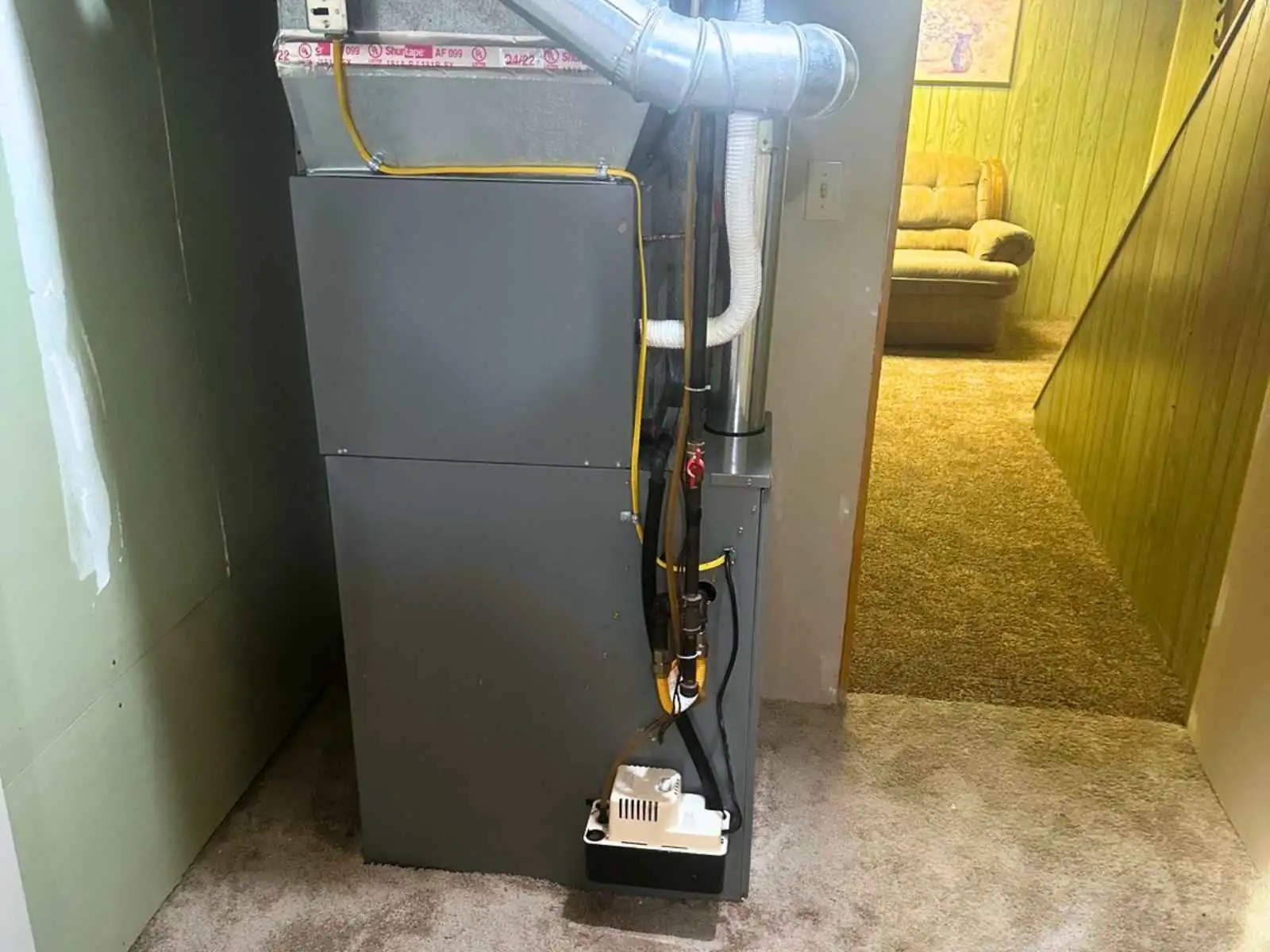
Residential furnace with metal ductwork, gas supply piping, and a condensate pump.
A replacement assessment includes the surrounding ductwork, fuel connection, venting, and drainage.

80% or condensing? Compare the installation around the furnace.

AFUE describes annual fuel-use efficiency; it does not describe the whole installation cost or your home’s distribution losses. Compare the equipment and the work needed to install it safely.

Non-condensing furnace options

An approximately 80% AFUE model needs an approved venting and combustion-air arrangement. Existing metal venting is something to inspect, not automatically reuse. Access, vent condition, remaining appliances, and applicable requirements affect feasibility.

High-efficiency condensing options

A condensing furnace needs manufacturer-approved venting and condensate handling. A finished basement may complicate routing; a cold crawlspace may need freeze protection. Pipe material, size, length, termination, and combustion-air provisions are specific to the equipment and installation.

Keeping a gas water heater on the old chimney?

If the furnace moves to a separate exhaust, assess the water heater’s remaining vent. The shared system has changed, so sizing, condition, and draft need review. Any required changes should be identified before installation day.

Technical references: DOE: direct-vent equipment; combustion appliance safety and venting (PDF).

Four airflow checks before a new furnace goes in.

Changing the cabinet or blower does not automatically resolve an airflow restriction. Check the existing distribution system against the selected equipment’s requirements.

Return-air capacity

Measure the airflow and pressure the proposed equipment needs. A narrow return in an older home may need attention, but age or neighborhood alone does not prove a duct is undersized.

Filter fit & resistance

Compare the filter’s pressure drop at the required airflow, cabinet space, and service access. A deeper media cabinet can be an option; no filter has zero resistance or a universal replacement interval.

Supply transitions & leakage

Check how the replacement cabinet connects to existing ducts. Specify any transition fabrication, sealing, or vibration treatment in the estimate rather than assuming every installation needs the same parts.

Room-by-room comfort

Record which rooms are cold and whether problems change with doors closed. Review supply and return paths, insulation, and balancing before assuming a larger furnace will fix upstairs comfort.

Start with the fuel your home actually uses.

Check the property’s actual supply rather than inferring fuel from its address. A furnace must be approved for the fuel used; any conversion needs the correct manufacturer-approved kit and procedures. Gas supply, equipment capacity at altitude, combustion, and startup checks must follow the selected model’s requirements.

For a rural home near Vaughn or Belt, compare delivered propane costs with electricity before considering a heat pump alongside the furnace. There is no single outdoor changeover temperature that fits every household.

Compare cold-climate heat pumps and dual-fuel planning →

What affects furnace replacement cost in Great Falls?

To compare prices, first check what’s included. Great Falls Heating and Air can discuss your existing equipment and the work your home needs; a written estimate should separate required work, optional upgrades, and exclusions.

  • Equipment and controls: The selected capacity, efficiency, burner staging, blower features, and thermostat compatibility affect the equipment and installation scope.
  • Venting and drainage: Compare the approved route, access, drainage, and any changes identified in the venting assessment above.
  • Ductwork and filtration: Cabinet transitions, return-air changes, sealing, and a different filter cabinet may add work when the existing setup does not meet the selected equipment’s requirements.
  • Fuel and electrical work: Include any approved fuel conversion, piping changes, electrical updates, or work by other trades identified for your property.
  • Access, removal, and permits: Tight stairs, crawlspace access, old-equipment disposal, and the applicable permit and inspection process can change the scope.
  • Optional additions and warranty terms: Identify any cooling or heat-pump work separately, along with labor coverage, registration responsibilities, and ongoing service costs.

Ask whether the total includes applicable taxes, permits, disposal, and all required installation work. Compare utility incentives separately until eligibility is confirmed. Your written quote should make clear what could change the price and how additional work would be approved.

Request a furnace replacement estimate →

Great Falls Heating and Air’s furnace estimate checklist.

Use these seven checks to compare our proposal with any others you receive. A lower price may reflect a different model, scope, or warranty; the important thing is understanding the difference before approving work.

On smaller screens, scroll the comparison sideways.

Compare equipment, installation work, and what you receive when it’s done
ItemWhat the estimate should specifyQuestions to ask
Sizing & equipmentExact model numbers, rated input and output, staging, and the basis for equipment selection.What heat-loss assumptions and local design conditions were used? How is altitude accounted for in equipment output?
Ductwork & filtrationIncluded supply/return changes, filter size and type, and how airflow will be checked.Which existing ducts stay? Are proposed changes required, optional, or excluded from this price?
Venting & drainageThe approved vent route, combustion-air provision, condensate handling, and any shared-chimney work.What happens to the water heater’s vent if the new furnace uses a separate exhaust?
Permits & inspectionThe applicable permitting authority, responsibility for applications, fees, and inspection arrangements.Are fees included? Who schedules the inspection and closes out any corrections?
Gas, electrical & controlsNecessary fuel conversion, piping or electrical work, thermostat compatibility, and subcontracted work.Which upgrades are included, and what site conditions could change the scope?
Removal & commissioningOld-equipment disposal, startup tests, documented settings, and homeowner instructions.What operating checks and records will I receive before the job is complete?
Price, schedule & warrantyTotal price, exclusions, payment terms, estimated downtime, and separate parts/labor warranty terms.Who registers the equipment, what deadlines apply, and what is the plan if the work takes longer?

Plan the work—and the time without heat.

For a winter replacement, agree on equipment availability, access, expected downtime, and what happens if the work runs longer. Clear the route to the furnace and secure pets. Do not assume same-day completion or temporary heaters unless those arrangements are confirmed.

Before work starts, clarify permits, inspection, old-equipment disposal, electrical or venting changes, and any work by other trades. When the work is complete, ask for the startup results, operating instructions, filter details, warranty terms, and registration responsibilities.

Great Falls publishes a mechanical-permit fee schedule covering furnace work (PDF). Confirm current fees and inspection requirements with the authority for your installation address; city and out-of-city projects can follow different processes.

Check which rebates apply to your utility account.

NorthWestern’s current natural-gas existing-home application excludes former Energy West Montana and Cut Bank Gas accounts. A NorthWestern bill alone does not establish eligibility. Electric incentives have separate account and equipment rules.

Confirm the current application, exact model eligibility, deadlines, and required paperwork before purchasing. Keep the incentive separate from the base installation price until eligibility is established.

Before counting a rebate: Rebate amounts, eligibility rules, deadlines, and funding may change, be suspended, or end without notice to Great Falls Heating and Air LLC and without our knowledge. Published offers do not guarantee availability, eligibility, approval, or payment. Before buying equipment or authorizing work, confirm current terms, funding, and any required advance approval directly with the program administrator. Review verified program details →

Official source: NorthWestern Energy natural-gas existing-home application.

Review Montana HVAC rebate guidance →

Before replacing equipment

Frequently asked questions about furnace installation in Great Falls.

How much does it cost to replace a furnace in Great Falls?

There isn’t one replacement price that fits every home. The furnace model and size, ductwork, venting, drainage, fuel and electrical work, access, permits, and removal all affect the total. Ask for a written estimate that separates required work, optional upgrades, and exclusions. National price guides are general budgeting references, not a quote, advertised rate, or price cap from Great Falls Heating and Air. Your project may cost less or substantially more. Review the price and how any additional work would be approved before committing.

Sources: Carrier: factors affecting a new gas furnace’s cost

What size furnace do I need? Should I get the same BTUs as the old one?

The old rating is useful information, but it isn’t a sizing calculation. New windows, added insulation, air leaks, or a finished room can change how much heat your house needs. Ask for a load calculation using the home’s current condition and local winter design conditions. Compare the selected furnace’s heating output, not just its fuel-input rating, and follow its altitude requirements. A bigger furnace won’t automatically fix a cold bedroom; airflow and insulation may need attention too.

Sources: ACCA: why bigger HVAC equipment isn’t always better

Is a two-stage furnace worth the extra cost? Is that the same as variable speed?

They describe different features. A two-stage burner has lower and higher heating outputs; a variable-speed blower adjusts airflow. The right combination may improve comfort in a suitable system, but it won’t automatically fix duct problems or guarantee lower bills. Ask what difference the upgrade should make in your home. Compare the added price, controls, noise, service needs, and warranty terms before paying for features you may not need.

Sources: Carrier: heating-output controls versus variable-speed airflow

Should I choose an 80% furnace or a high-efficiency condensing furnace?

Compare the installation work along with the AFUE efficiency rating. A non-condensing furnace needs suitable combustion air and venting. A condensing furnace also needs approved venting and a way to handle condensate, with freeze protection where needed. A finished basement, exterior vent route, or shared water-heater chimney can change the work involved. Compare the full installed price, expected fuel use, and the equipment that fits your home. The efficiency percentage alone won’t tell you what your bills will be.

Sources: DOE Building Science Education: direct-vent equipment

Can I replace just the furnace and keep my existing air conditioner?

Possibly. The new furnace’s blower, indoor cooling coil, controls, and duct airflow need to work with your existing AC. Have the equipment checked together before deciding what stays. Ask which parts can be reused, which need changing, and how both heating and cooling will be tested. If you expect to replace the AC later or add a heat pump, mention that now so the furnace proposal accounts for that plan. Replacing one system doesn’t automatically mean replacing both.

Sources: Carrier: choosing a furnace and assessing existing cooling equipment

Will my gas water heater need changes if the new furnace stops using the chimney?

It needs a venting assessment, even if you’re keeping the water heater. Removing the furnace changes the appliances using the chimney. The remaining vent may need changes so the water heater can vent safely; it isn’t automatically safe to leave it as it was. Ask what was checked and have any required venting work and safety tests included in the written proposal. A furnace replacement doesn’t automatically require a new water heater, but it does require looking at how the remaining appliance will vent.

Sources: PNNL: shared flues and an orphaned water heater after furnace replacement

How long will furnace replacement take, and will I be without heat overnight?

Ask for the schedule for your actual job before the old furnace is disconnected. Equipment access, duct changes, venting, electrical work, inspections, and parts can affect completion. For a winter replacement, agree on safe temporary arrangements and what happens if the work runs longer. Don’t assume same-day completion, loan heaters, or overnight heat unless those arrangements are confirmed. Before the job is complete, ask for startup results, operating instructions, filter details, and warranty and registration responsibilities.

Sources: Carrier: furnace installation steps and timing considerations

Do I need a permit for furnace replacement, and who handles it?

Confirm the requirements for your installation address before work starts. Great Falls publishes mechanical-permit forms, while projects outside a certified local jurisdiction follow the state’s rules, including applicable residential exemptions. Don’t assume the city process applies to every rural home. Ask the relevant building department what is required, and have the proposal state who handles any permits, fees, inspections, and corrections. A homeowner application isn’t automatically the right form for a contractor’s installation.

Sources: City of Great Falls: building and mechanical-permit forms; Montana DLI: mechanical-permit jurisdiction and exemptions
Your next step

Get a written estimate you can compare.

Tell us about your furnace, your home, and what you want to improve. Call to discuss availability or send an estimate request. Online forms are not continuously monitored.

Montana registrationC1680325
Call 406-781-4027Tell us what’s happening and ask about availability.Request an estimate ↗Tell us what you need. We’ll be in touch to talk it through.
Tap to callRequest an estimate ↗
Great Falls Heating and Air