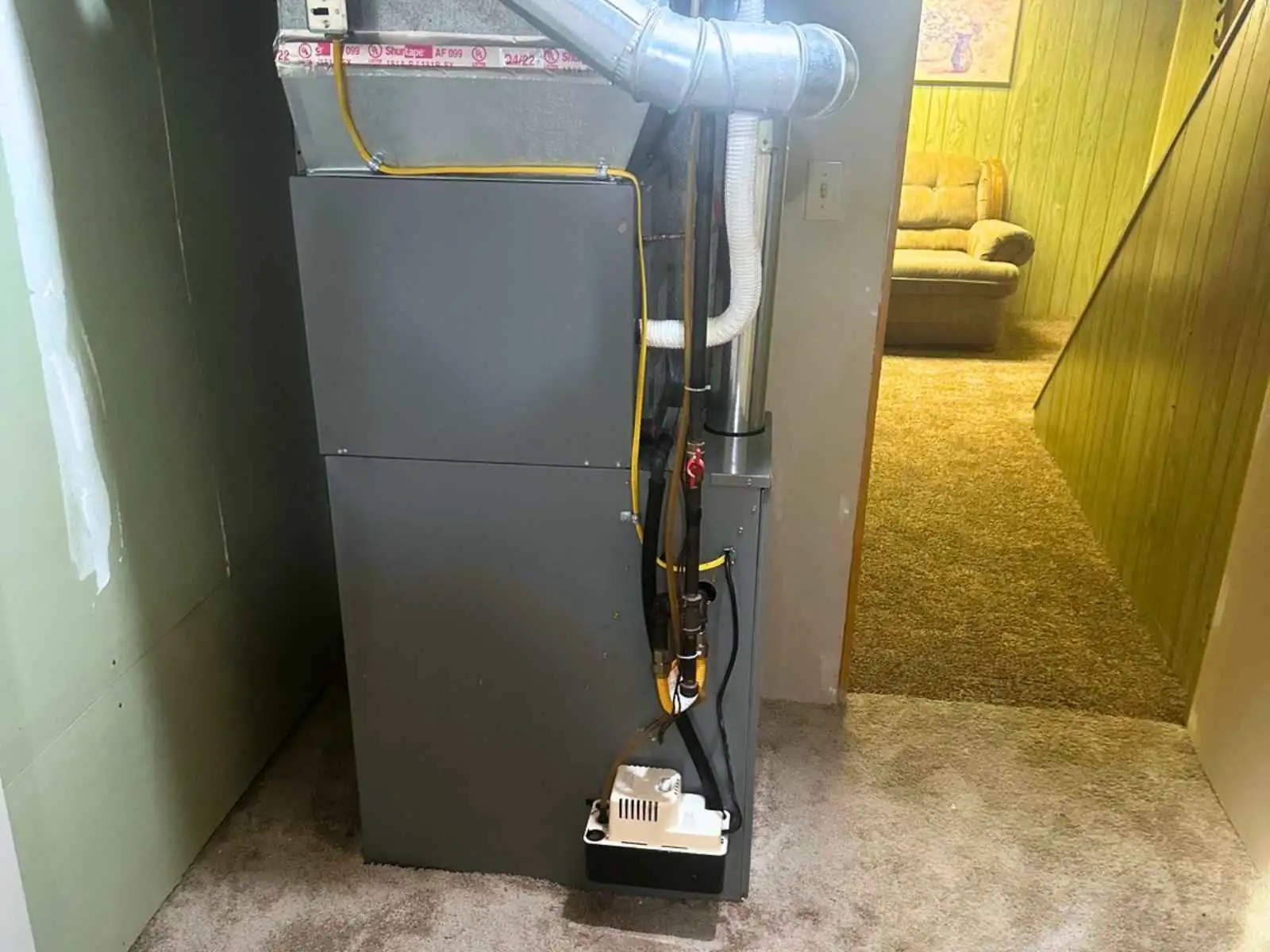
Natural Gas & Propane Furnaces
From older 80% standard-efficiency workhorses to modern 95%+ AFUE two-stage and modulating condensing furnaces. We handle ignitors, blower motors, control boards, and gas valve conversions.
Winter heating / Great Falls & Cascade County
Furnace repairs, seasonal tune-ups, and replacement planning for Great Falls homes. Understand the problem and your options before deciding on the work.
Great Falls heating has to handle long runs during deep freezes and lighter demand during winter warm-ups. Wind exposure, snow around accessible vents, and the equipment’s altitude requirements all belong in the assessment.
For a home in Riverview or a property near Belt, start with the furnace’s actual condition, fuel supply, and the rooms that need heat. We need to see what’s happening in your home before recommending a repair, an airflow change, or a replacement.
A service visit should leave you understanding the problem and the proposed work. Discuss the scope and charges when arranging the visit.
Call 406-781-4027 to ask about today's availability.
Warning: If you smell rotten-egg gas odor, your carbon monoxide alarm sounds, or you suspect a gas or CO leak, do not touch your thermostat or light switches. Leave the house immediately and call 911 or your gas utility from outside.
Read our winter furnace safety & troubleshooting guide →We work on major residential forced-air brands (Lennox, Trane, Carrier, Goodman, Rheem, and more)—even if we didn’t install your original unit.
From older 80% standard-efficiency workhorses to modern 95%+ AFUE two-stage and modulating condensing furnaces. We handle ignitors, blower motors, control boards, and gas valve conversions.
Want efficient electric heating during mild fall and spring weather with automatic gas furnace backup when January hits -20°F? We design and service dual-fuel systems built for Montana utility rates.
Keep your detached garage, workshop, or rural outbuilding above freezing with properly vented hanging gas unit heaters and low-clearance infrared tube heaters.
Smart thermostat wiring, dual-fuel staging controls, and return-air modifications to fix freezing basement bedrooms and hot upstairs hallways.
Similar symptoms can have different causes. Testing establishes which repair is appropriate.
Usually points to a failed ignition sequence. A dirty flame sensor, burned-out hot surface ignitor, or a pressure switch tripped by high wind or a frosted PVC exhaust pipe will shut down the gas burners while the fan keeps blowing.
If your furnace kicks on for three minutes, shuts down, and tries again, it is likely overheating. Check for a clogged air filter or blocked registers first. If the filter is clean, you may have a failing blower motor or bad limit switch.
A mini “boom” on startup can mean delayed gas ignition—dirty burners may be letting gas build up before lighting. High-pitched squealing or metallic scraping can point to a failing inducer fan or blower wheel bearing. Stop using the furnace and arrange a professional inspection.
Persistent yellow flames, soot, or a change in burner appearance need professional inspection; flame color alone cannot diagnose a carbon monoxide leak. If your CO alarm sounds or you suspect a leak, leave immediately and call 911 from outside. Do not stay inside to inspect or shut down the furnace.
Fall heating maintenance
Plan a seasonal check before you’re relying on the furnace every day. These are the areas our heating inspection covers:
Inspecting the heat exchanger, checking flue draft, and testing for carbon monoxide.
Cleaning oxidation from the flame rod and testing ignitor resistance according to the manufacturer’s service instructions.
Verifying manifold pressure against manufacturer requirements so your burners fire clean at 3,300+ feet.
Checking motor operation, bearings, and the run capacitor where fitted before continuous winter runs wear them out.
Flushing drain traps and checking pressure-switch tubing and PVC intake/exhaust lines on high-efficiency condensing furnaces.
Explore furnace maintenance, seasonal checks & homeowner care →
Our approach / Heating decisions
Our starting point is whether your furnace can be repaired safely and sensibly. We weigh the actual fault, overall condition, repair history, and available parts before recommending replacement. Age belongs in that conversation alongside those findings.
Planning an upgrade? Compare the full installed price and expected energy use before choosing equipment. Utility incentives depend on the account, exact equipment, project, and current program rules; an upgrade does not automatically qualify.
Before counting a rebate: Rebate amounts, eligibility rules, deadlines, and funding may change, be suspended, or end without notice to Great Falls Heating and Air LLC and without our knowledge. Published offers do not guarantee availability, eligibility, approval, or payment. Before buying equipment or authorizing work, confirm current terms, funding, and any required advance approval directly with the program administrator. Review verified program details →
Great Falls & surrounding communities
Based in Great Falls, we discuss heating service in Great Falls, Black Eagle, Belt, Vaughn, Ulm, Sun Prairie, Cascade, Fort Shaw, Simms, and Centerville—plus off-base households near Malmstrom AFB. Confirm availability for your address and equipment when calling.
Not sure whether we can get to your home? Call 406-781-4027 and ask.
Useful answers
Repair costs, cold air, repeated shutdowns, and the decisions homeowners face before approving heating work.
Angi’s 2026 guide reports a national average of $318, with most homeowners paying $133–$505. These are general budgeting references, not a quote, advertised rate, or price cap from Great Falls Heating and Air. Your repair may cost less or substantially more depending on the fault, parts, equipment access, labor, warranty coverage, and any emergency or after-hours charges.
Call to confirm the diagnostic fee and what it includes. Review the price for your proposed repair before approving the work.
Source: Angi: furnace repair costs, updated September 25, 2026.
Check whether the thermostat fan is set to ON. That setting can circulate room-temperature air between heating cycles. If the house is losing heat, an airflow restriction, ignition problem, fuel-supply issue, or safety shutdown may need diagnosis. The symptom alone doesn’t tell you which part has failed.
Keep panels closed and don’t bypass safety switches or keep resetting the furnace. Call for service if it won’t heat. If you smell gas or a CO alarm sounds, leave immediately and call 911 from a safe location.
Background: Carrier: reasons a furnace blows cold air.
Restricted airflow, an ignition or control fault, or a venting problem can interrupt heating. Wind and snow around outside intake or exhaust openings are useful details to report, but they don’t prove the cause. Tell us when the furnace stops, whether it restarts, and whether the indoor temperature is falling.
From ground level, look for loose snow blocking accessible vents. Clear only loose snow you can safely reach. Don’t climb, chip ice, disconnect venting, or bypass a safety switch. If it keeps shutting down, stop troubleshooting and call. For gas odor or a CO alarm, leave immediately and call 911 from outside.
Background: Trane: furnace shutdown and lockout.
Start with what’s wrong and whether a repair can restore safe operation. Compare the repair price with the furnace’s condition, repair history, available parts, and any warranty coverage. Repeated failures or a major repair may make replacement worth considering, but age alone doesn’t settle the decision.
If some rooms stay cold, the ductwork, insulation, or airflow may also need attention. A new furnace alone may not solve that problem. Compare the full installation work in our furnace replacement guide.
Background: ENERGY STAR: when to consider replacement or system improvements.
Yes. CPSC recommends a professional inspection of fuel-burning heating systems each year, including furnaces. Follow your equipment’s maintenance instructions too. A furnace producing heat can still have a problem that needs attention.
Ask what the visit includes and whether cleaning, filters, or repairs are priced separately. Maintenance can identify concerns, but it can’t guarantee a winter without breakdowns. See our furnace maintenance guide for the checks to discuss.
If you smell gas, hear a CO alarm, or suspect a gas or carbon monoxide leak, leave immediately and call 911 or your gas utility from outside. Otherwise, keep checks to the homeowner tasks your equipment instructions allow:
If the furnace still won’t heat, call for 24/7 emergency service and repair. Don’t wait for a form reply when your home is losing heat.
Background: Carrier: thermostat, airflow, and professional service checks.
Possibly. A dual-fuel system uses a heat pump with a compatible gas or propane furnace. The furnace’s condition, indoor coil, blower, ductwork, electrical supply, and controls all need to work with the proposed equipment.
Compare the heat pump’s output in cold weather with your home’s heating needs, then plan how the furnace will take over when needed. The settings depend on the equipment and your fuel costs; there isn’t one changeover temperature for every Great Falls home. Our cold-climate heat pump guide explains the options.
Background: Carrier: dual-fuel equipment and controls.
Have a specific question about rebates? Read our 2026 Montana HVAC Rebates breakdown →
Montana contractor registration #C1680325. Call to discuss service availability, diagnostic charges, and the scope of your visit.
Confirm payment methods and the records needed for your project before approving work. Utility applications can require itemized invoices and equipment documentation; review the current Montana HVAC rebate guidance.
Your next step
Call to discuss a repair, seasonal check, or replacement estimate. For urgent no-heat problems, call first. Online forms are not continuously monitored.