
AC installation / Great Falls & Cascade County

AC installation starts with the rooms you need to cool.

Tell us which rooms need cooling and what you want to improve. Whether you’re replacing an AC or adding cooling for the first time, your quote should explain the equipment and all the work included.

Veteran-owned · Locally operatedMontana registration C1680325

Call to confirm an estimate and current availability. An online inquiry does not reserve an appointment.

Our approach / Start with the intended result

What do you want your new AC to improve?

We start with three questions: which rooms need cooling, will the proposed equipment work with your house, and what needs to change? A model number alone cannot explain whether a warm bedroom, a new addition, or a whole-house cooling need has been addressed.

For a home near Skyline Drive, describe a sunny room’s afternoon temperature and whether the rest of the house already stays comfortable. That is a different planning conversation from adding cooling throughout a home.

For a property near Cascade, share the project address, access, electrical service information, and existing equipment before a visit. Permit jurisdiction and installation access need to be established for that property rather than assumed from a Great Falls mailing area.

If your present AC has stopped working, start with the repair and diagnostic assessment before assuming it needs replacement.

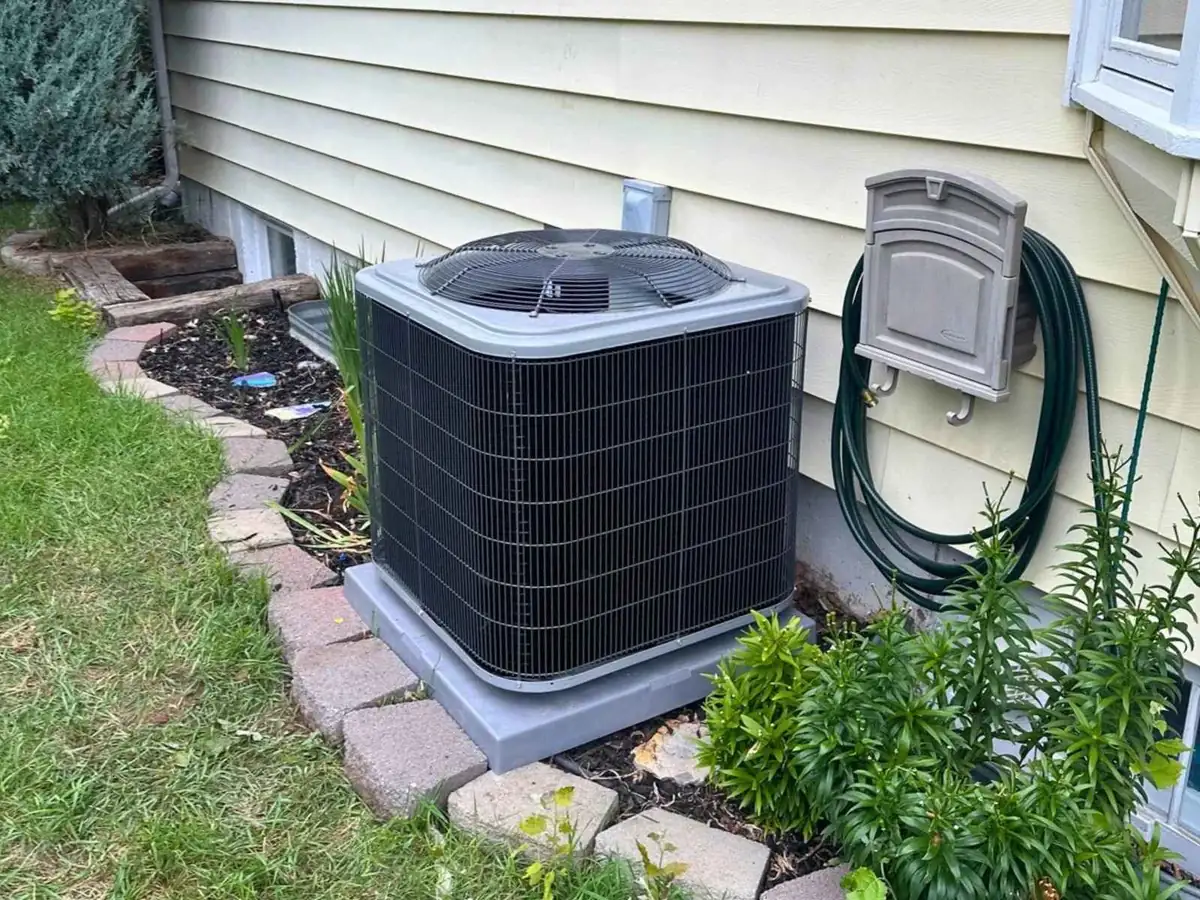
Outdoor central air conditioner on a support pad beside a light-sided home and garden bed.
Residential outdoor condenser with the top fan grille and coil cabinet visible.

Size for the house, then check how air reaches each room.

Floor area and the old unit’s tonnage are starting information, not a complete selection method. A residential load calculation accounts for the building envelope, windows, orientation, air leakage, occupancy assumptions, and local design conditions. Equipment selection then considers manufacturer performance data and the calculated sensible and moisture loads.

Great Falls’ dry summer weather does not make moisture load irrelevant or justify a universal airflow setting. Return paths, blower capability, coil condition, and duct restrictions affect delivered cooling. Ask what sizing information supports the proposal, which airflow changes are included, and how the installation will be checked.

Technical background: ACCA Manual J, Manual S, and duct-design guidance; ACCA: cooling airflow depends on the application.

Are you replacing AC, adding it, or cooling one room?

Each starts with a different existing system and a different intended result.

Replace an existing central AC

Compare the outdoor unit with the indoor coil, blower, controls, and refrigerant piping. Keeping a sound furnace may be possible, but the proposed combination and any reused components must meet the selected equipment’s requirements.

Add cooling to an existing furnace

Heating ducts do not automatically establish cooling capacity or room coverage. Assess the blower, supply and return paths, coil space, electrical supply, drainage, outdoor placement, and access before defining the work.

Solve a room-specific comfort problem

An addition or an upstairs bedroom may need an airflow assessment or a separate ductless option. Define which rooms need cooling, including rooms with closed doors, before choosing a whole-house replacement or an additional system.

What changes the installed cost?

Compare everything the job needs, including work around the new equipment. Request a written estimate for your equipment and address, and use these factors to compare proposals:

  • Equipment and compatibility: capacity, controls, indoor coil, blower, and the proposed indoor/outdoor combination.
  • Air distribution: return air, supply changes, filter arrangement, and access to make those changes.
  • Electrical work: available circuit capacity, wiring, disconnect, and any required panel work.
  • Piping and drainage: approved line reuse or replacement, routing, insulation, condensate disposal, and protection.
  • Placement and logistics: support, clearances, service access, removal, and agreed restoration.
  • Permits and handoff: applicable permits, inspections, startup checks, documentation, and warranty responsibilities.

Within the city, use Great Falls’ applicable code and permit process. Outside a certified local jurisdiction, state permitting may apply. Confirm requirements for the specific address and work.

Official guidance: City of Great Falls code adoption; Montana mechanical permits and jurisdiction.

Seven things to look for in your AC quote.

Use this checklist to ask questions about the proposed work and differences between estimates.

On smaller screens, scroll the checklist sideways.

Installation scope / What to confirm in writing
Installation scopeWhat to confirm
Comfort goal and equipment selectionRooms included, known limitations, sizing basis, and exact indoor/outdoor equipment and controls.
Existing furnace and airflowBlower compatibility, supply/return changes, filter arrangement, and how cooling airflow will be checked.
Refrigerant piping and drainageWhich lines can be reused under manufacturer requirements, which need replacement, and the condensate route and protection.
Electrical and permitsRequired circuit, disconnect, wiring or panel work; permit responsibility and applicable inspections for the project address.
Placement and accessSupport, required clearances, service access, line routing, and any agreed landscaping or surface restoration.
Startup and verificationManufacturer-required setup and operating checks, test conditions, recorded results, and any seasonal follow-up needed.
Handoff, exclusions, and warrantyRemoval/disposal, cleanup, owner controls and filter instructions, warranty terms/registration responsibilities, and work excluded from the price.

Know which refrigerant and components the proposal includes.

Ask for the actual refrigerant and exact equipment identification. Many newer systems use lower-GWP refrigerants such as R-32 or R-454B. Component compatibility, installation provisions, and any required safety features follow the chosen equipment’s instructions and applicable code.

The calendar alone does not identify eligible inventory. EPA’s May 2026 final rule, effective July 27, permits continued installation of qualifying higher-GWP residential and light-commercial equipment manufactured or imported before January 1, 2025. Have the contractor establish eligibility for the proposed equipment. R-32 and R-454B are not drop-in substitutes for R-410A.

Source: EPA final rule: pre-2025 equipment inventory exception. Refrigerant guidance reviewed October 19, 2026.

Replacing your AC? Compare a heat pump too.

A heat pump supplies cooling and can also supply heat. When AC already needs replacement, compare it with standard AC using the full installation work, existing furnace compatibility, controls, documented equipment performance, and actual utility and fuel costs. Keep the backup-heating plan visible for Cascade County winter conditions.

Standard AC may still fit your priorities. A rebate is a separate eligibility question, not proof that one installation costs less. NorthWestern’s current electric existing-home program has account, equipment, timing, and funding requirements; other utilities have their own rules.

Before counting a rebate: Rebate amounts, eligibility rules, deadlines, and funding may change, be suspended, or end without notice to Great Falls Heating and Air LLC and without our knowledge. Published offers do not guarantee availability, eligibility, approval, or payment. Before buying equipment or authorizing work, confirm current terms, funding, and any required advance approval directly with the program administrator. Review verified program details →

Eligibility source: NorthWestern Energy’s 2026–2027 electric existing-home application. Recheck before relying on an incentive.
Plan installation day and what happens afterward.

Before work, confirm the schedule, work areas, access, electrical interruptions, equipment removal, and responsibility for inspections. Existing conditions, parts, inspections, and weather can affect completion; confirm the actual plan rather than assuming a one-day installation.

When the work is complete, ask for model information, owner instructions, thermostat operation, filter care, warranty and registration responsibilities, and startup records. If outdoor conditions prevent a required operating check, the written plan should explain the remaining check and follow-up.

Plan for smoke season alongside cooling.

Cooling can help keep windows shut during wildfire smoke events. Fine-particle filtration still needs a suitable filter or air cleaner and compatible airflow; a standard ductless screen is not automatically a smoke filter. Include filtration requirements in the conversation before selecting equipment.

Background: EPA: wildfire smoke and indoor air quality.

Plan ongoing AC maintenance and coil care →

Back to Great Falls cooling services and seasonal care →

Before approving an installation

Frequently asked questions about AC installation in Great Falls.

Can I replace my AC without replacing a furnace that still works?

Sometimes, but the new AC has to work with the equipment you keep. Ask the installer to check the furnace blower, indoor coil, controls, available airflow, and refrigerant piping against the proposed equipment’s requirements. Have the quote identify the exact indoor and outdoor models, what stays, and what changes. A working furnace is worth evaluating before agreeing to replace it, but its condition and compatibility still matter.

Sources: Carrier: installation assessment

How much does AC installation cost in Great Falls, and why are my quotes so different?

The price depends on the equipment and the work your house needs, including the indoor coil, duct changes, electrical work, piping, drainage, access, and applicable permits. Compare the exact models, included work, exclusions, startup checks, and parts and labor warranty terms before comparing totals. Online cost guides are general budgeting references, not a quote, advertised rate, or price cap from Great Falls Heating and Air; your actual cost may be lower or substantially higher. Request a written estimate for your home and agree on how additional work will be priced before approving it.

Sources: Carrier: AC installation cost factors

Should I get a bigger AC if the upstairs never gets cool?

A bigger unit may leave the hot bedroom just as uncomfortable if air is not reaching it properly. Ask for a load calculation based on your home’s windows, insulation, orientation, and local design conditions, followed by equipment selection and a check of supply and return airflow. Tell the installer which rooms get hot, when it happens, and whether the doors are usually closed. The quote should explain how those rooms will be addressed rather than simply repeating the old unit’s size or increasing its tonnage.

Sources: ACCA: residential sizing and equipment selection manuals; ACCA: cooling airflow

Can the new AC use my old indoor coil and refrigerant lines?

Do not assume they can stay just because they fit. Reuse depends on the selected equipment’s instructions, refrigerant, component compatibility, line size, condition, and routing. Ask the quote to identify any reused coil or piping and explain the required checks or preparation. A change to R-32 or R-454B is not simply a refill of an R-410A system; compatible equipment and model-specific installation provisions matter.

Sources: EPA: refrigerant transition and system components; Carrier: installation assessment

How long will I be without AC during the replacement?

Confirm the planned cooling interruption for your job before work begins. Access, duct or electrical changes, equipment availability, inspections, and startup conditions can affect when the system is ready to use, so a one-day completion should not be assumed. Ask what you need to clear, whether anyone needs to be home, and how schedule changes will be communicated. If weather prevents a required operating check, have the remaining check and follow-up plan recorded in writing.

Sources: Carrier: installation steps and timing

What should I check before I approve an AC installation quote?

Look for the exact equipment, sizing basis, intended room coverage, and all work included around the units. Confirm duct and electrical changes, piping and drainage, removal, permit and inspection responsibility for your address, startup records, and warranty registration responsibilities. If a heat pump is offered, compare its heating performance, furnace compatibility, backup plan, controls, and full installed cost with standard AC. Verify any rebate separately before counting it toward the price, and get exclusions and changes to the agreed work in writing.

Sources: Carrier: installation planning and testing

Your next step

Tell us which rooms need better cooling.

Discuss the existing equipment, your comfort priorities, and an installation estimate. Call for current availability; online inquiries do not reserve appointments.

Montana registrationC1680325
Call 406-781-4027Tell us what’s happening and ask about availability.Request an installation estimate ↗Tell us what you need. We’ll be in touch to talk it through.
Tap to callRequest an estimate ↗
Great Falls Heating and Air