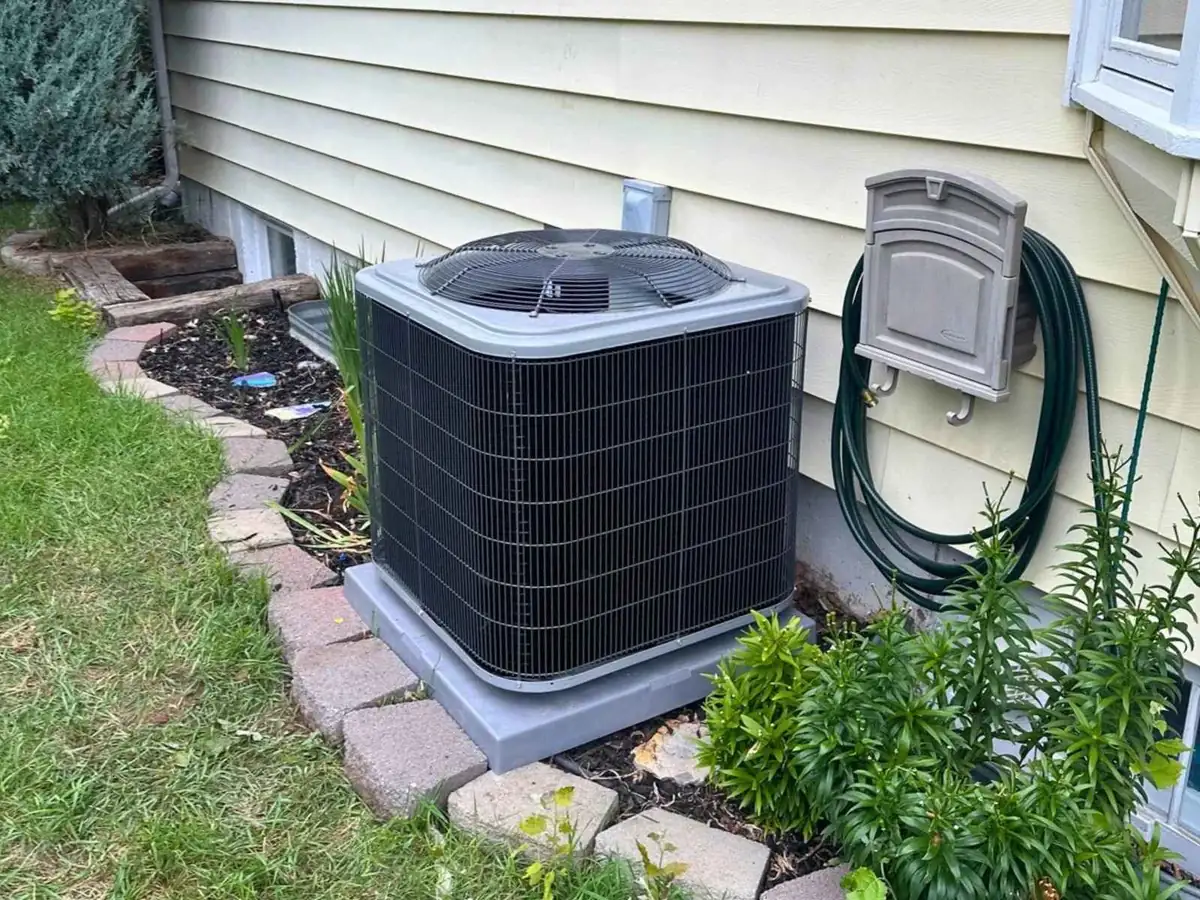
Watch the outdoor coil
From outside the cabinet, note matted fluff, unusual deposits, or vegetation crowding the unit. Keep loose debris away as your owner instructions allow. Do not remove panels, force brushes into fins, or use a pressure washer.
Seasonal cooling service / Great Falls & Cascade County
Plan seasonal service around your equipment and what it has been exposed to. Understand the cleaning needed, the checks performed, and any work that needs a separate decision.
Call 406-781-4027 for current pricing, included service, and availability. An online request does not reserve an appointment; forms are not continuously monitored.
Our approach / Condition and season
Cottonwood, dust, smoke, and months of use can leave different problems behind. We look at the outdoor unit, indoor airflow, drainage, and how the system runs. You should know what we found and what needs attention.
Cottonwood fluff on the outdoor coil and smoke-related indoor filter care involve different parts of the system. A clean-looking outdoor cabinet cannot tell you whether the indoor filter, condensate drain, or controls need attention.
For a Great Falls home with cottonwoods nearby, describe how quickly debris collects on the coil. For a property near Fort Shaw, share directions, access, the equipment model, and the water source if deposits are a concern. The equipment and its condition determine the work needed.
Cleaning and filtration background: Carrier coil-care guidance; EPA wildfire smoke and indoor air guidance.
A quick system map
Outdoor debris, indoor filters, and water from cooling each need their own check.
Outside / Heat release
Cottonwood, dust & nearby vegetation
Check buildup, clearances, and coil-specific cleaning needs.
Inside / Air circulation
Indoor particles & filter resistance
Check filter fit, condition, compatibility, and airflow paths.
Inside / Water removal
Moisture collected during cooling
Check accessible drains and any fitted pump or overflow controls.
Simplified system map. Equipment layout and the appropriate service method vary by model.
Confirm the included work for your model before booking. This checklist helps connect each area to its purpose and possible follow-up; cleaning depth, readings, and access requirements vary by system.
On smaller screens, scroll the checklist sideways.
| Check | What it tells you | Possible follow-up |
|---|---|---|
| Outdoor coil, cabinet, and clearances | Cottonwood, dust, vegetation, deposits, and access can affect cleaning needs and outdoor airflow. | Identify the coil type and condition; agree on manufacturer-approved cleaning and any separate access or repair work. |
| Electrical components and controls | Capacitors, contactors, wiring, and controls differ between conventional and inverter-driven equipment. | Check the components fitted using appropriate procedures and specifications; explain out-of-range findings and proposed work. |
| Compressor and fan operation | Operating measurements need context, including load, outdoor conditions, equipment type, and manufacturer data. | Record relevant readings when conditions permit. Explain what they establish and any further diagnosis needed. |
| Cooling and refrigerant performance | Airflow, temperatures, charge, and controls interact. One vent temperature can’t tell you whether the whole system is working correctly. | Use manufacturer-specified assessment under suitable conditions. Investigate suspected charge problems rather than treating a recharge as routine maintenance. |
| Condensate drainage and protection | Accessible pans, drains, pumps, and any fitted overflow controls need assessment for that installation. | Confirm included inspection or cleaning, test applicable controls, and identify drainage repairs or further access requirements. |
| Filter, blower, and airflow paths | Filter fit and resistance, blower operation, and blocked supply or return paths can affect cooling. | Review filter compatibility and condition; discuss airflow or static-pressure testing where findings call for it. |
| Records, owner care, and follow-up | A useful record connects checks to findings and separates completed work from recommendations. | Ask for work performed, available readings and test limits, owner-care instructions, and the scope and price of any additional work. |
Technical context: ACCA: airflow depends on the application. Use model-specific requirements rather than a universal airflow or temperature-drop target.
Matted debris and visible deposits are reasons to inspect the coil and choose an appropriate cleaning method. Access, rinse direction, cleaners, and any panel removal depend on the equipment and coil manufacturer’s instructions. Deep cleaning may require a separate scope.
The City of Great Falls reports municipal water hardness of 127–167 milligrams per liter, or 7.4–9.8 grains per gallon. If irrigation repeatedly wets the condenser, redirect the sprinkler and report deposits. Follow the coil’s approved cleaning method. For rural properties, confirm the water source and assess visible deposits before choosing a treatment.
Sources: City of Great Falls water-treatment questions; Carrier: coil-specific cleaning guidance. Reviewed October 19, 2026.
Follow your owner instructions and keep homeowner tasks to accessible controls and permitted care. Leave electrical testing, refrigerant work, cabinet disassembly, and unfamiliar cleaning to a qualified technician.
From outside the cabinet, note matted fluff, unusual deposits, or vegetation crowding the unit. Keep loose debris away as your owner instructions allow. Do not remove panels, force brushes into fins, or use a pressure washer.
Inspect more frequently when smoke affects the area. Use the correct size and a compatible filter, replace it when needed, and keep supply and return grilles clear. The filter’s depth or MERV rating alone won’t tell you whether it fits your system’s needs.
Redirect irrigation that repeatedly wets the condenser. Report visible deposits and follow coil-specific cleaning guidance rather than choosing a cleaner by appearance alone.
Note noise, water, displayed alerts, uneven cooling, new filter types, and recent building changes. Visible ice or loss of cooling calls for a repair assessment, rather than simply waiting for a seasonal appointment.
Filter guidance: EPA recommends MERV 13 or the highest efficiency the system can accommodate, with frequent inspection during smoke events.
A wall-mounted indoor unit has different filter, blower, coil, and drainage arrangements from a furnace-based central system. Follow its instructions for accessible washable filters. Ask whether indoor blower or coil cleaning is indicated and whether it is included in the visit or separately priced.
Musty odors, poor airflow, visible contamination, and drainage trouble deserve assessment; they do not establish a universal cleaning interval or a particular fault. Deep cleaning needs model-appropriate access and protection for electronics and the surrounding room.
Heat pump operating problems or winter maintenance? →
Planning a new mini-split? Review room coverage and service access →
Review ductless and central heat-pump options →Follow the exact model’s instructions on covering a seasonal air conditioner while it is shut down, and remove any permitted cover before operation. A heat pump running for winter heating needs unobstructed airflow. Do not wrap it or improvise a solid cover or weighted plywood over it.
Discuss falling ice, drifting snow, or service-access concerns at the actual equipment location.
Manufacturer guidance: Trane seasonal AC care; heat-pump winter preparation.
Ask for a dated record of completed work, available measurements, relevant test conditions, and anything that could not be checked. Separate owner care, recommended cleaning, further diagnosis, and proposed repairs so each next step has a clear purpose and price.
Keep records with the equipment documents and read the actual warranty. Maintenance does not guarantee against future failures or promise that a warranty claim will be approved. Registration, exclusions, parts and labor coverage, and maintenance requirements vary.
Example manufacturer terms: Trane warranty and registration guidance. Refer to your own equipment’s warranty.
If the system is already struggling, use the repair page to describe the symptoms. If assessment points toward replacement, compare all the installation work rather than assuming a tune-up or new outdoor unit will solve a room-comfort problem.
Seasonal service questions
A checkup can uncover dirty coils, drainage trouble, or operating conditions that changing the filter alone will not address. Ask what will be inspected, cleaned, and tested, and request a record of the findings rather than judging the visit by its length. Maintenance cannot guarantee lower bills or prevent every breakdown. Keep dated records, and check your equipment’s actual warranty terms instead of assuming a tune-up guarantees coverage.
Sources: ENERGY STAR: maintenance checklist; Trane: warranty terms and registration
ENERGY STAR recommends an annual pre-season cooling checkup; spring is a useful time to plan ahead of summer demand. Follow your model’s instructions, and ask whether outdoor conditions allow all required operating checks during the visit. Cottonwood, dust, and smoke can create cleaning or filter needs between appointments. If the AC develops ice, stops cooling, or leaks water, call about a repair assessment instead of waiting for the next seasonal visit.
Sources: ENERGY STAR: annual pre-season checkups; Carrier: coil care
Before booking, confirm the price and which checks and cleaning are included for your equipment. Ask about the coils, fitted electrical components and controls, fan and compressor operation, cooling performance, accessible drains, filters, and airflow. Deep cleaning, leak detection, additional diagnosis, and repairs may be separate work; ask for the findings, proposed work, and price before approving them. Your cost depends on the equipment, access, condition, and agreed work, and general online prices are not a quote, advertised rate, or price cap from Great Falls Heating and Air.
A refrigerant top-off should not be treated as routine annual upkeep. If testing indicates a low charge, ask how that was established and what investigation is needed to explain it. EPA advises locating and repairing leaks rather than repeatedly topping off a leaking system. Refrigerant handling belongs with a qualified technician, and any leak testing or repair should have an agreed scope and price.
Keep homeowner cleaning to tasks the instructions for your exact equipment allow. Coil type, access, and electrical protection determine the method; do not remove panels, spray electrical components, force brushes into fins, or use a pressure washer. From outside the cabinet, note matted fluff or deposits and ask whether professional cleaning is needed. Keep sprinklers from repeatedly wetting the unit, and do not choose a chemical cleaner just from the appearance of the buildup.
Yes—inspect it more frequently during smoke events and replace it when needed, following your equipment instructions. EPA recommends MERV 13 or the highest efficiency your system can accommodate, so check compatibility before choosing a more restrictive filter. Thickness or MERV rating alone does not establish whether a filter will work properly in your system. If compatibility is uncertain, ask about airflow and consider a suitable portable air cleaner to supplement filtration.
Your next step
Discuss your equipment, recent changes, and seasonal maintenance needs. Call to confirm included work, pricing, and availability.